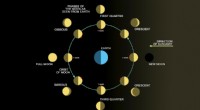
1. Phases of Venus:
* Observation: Galileo observed that Venus goes through phases, similar to the Moon, with a full range from crescent to full.
* Support for Heliocentric Model: In a geocentric model (Earth-centered), Venus should always be seen as a crescent, since it would always be between the Sun and Earth. However, the phases of Venus could only be explained if it was orbiting the Sun, just like the Earth.
2. Moons of Jupiter:
* Observation: Galileo discovered four moons orbiting Jupiter, which he called "Medicean Stars."
* Support for Heliocentric Model: The existence of celestial bodies orbiting something other than Earth challenged the idea of Earth as the center of the universe. This provided evidence that other celestial bodies could be centers of motion, supporting the heliocentric model.
3. Sunspots:
* Observation: Galileo observed dark spots on the Sun, which he named "sunspots." He tracked their movement across the solar disk, showing that the Sun itself rotates.
* Support for Heliocentric Model: Observing the Sun's rotation helped to solidify the idea that the Sun was not a stationary, unchanging object, as had been previously believed. This challenged the geocentric model, where the Sun was assumed to be fixed.
4. Milky Way:
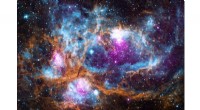
* Observation: Through his telescope, Galileo saw that the Milky Way, previously thought to be a blurry cloud, was actually composed of countless individual stars.
* Support for Heliocentric Model: The vastness of the Milky Way implied that the universe was much larger than previously believed. This supported the heliocentric model, as it shifted the focus away from a small, Earth-centered universe to a much grander, Sun-centered one.
5. Lunar Surface:
* Observation: Galileo observed that the Moon's surface was not smooth, as previously thought, but was covered in craters, mountains, and valleys.
* Support for Heliocentric Model: While not directly supporting the heliocentric model, this observation challenged the idea that the heavens were perfect and unchanging, which was a cornerstone of the geocentric model. It emphasized the idea of change and complexity within the universe.
While these observations provided strong support for the heliocentric model, it took time for the scientific community to fully accept it. Galileo's work was met with opposition from the Church and some scientists who clung to the geocentric model. Nevertheless, his observations with the telescope laid the foundation for a new understanding of the solar system and the universe as a whole.