Here's why:
* The electromagnetic spectrum is a range of frequencies. It describes all the different forms of light, from radio waves to gamma rays, and is not a property of the universe itself.
* The universe doesn't have a single coefficient. The universe is incredibly vast and diverse. Different regions of space have different properties, and the electromagnetic radiation they emit varies widely.
What you might be thinking of:
* Cosmic Microwave Background (CMB): This is a faint afterglow of the Big Bang, and it's a nearly uniform bath of low-frequency microwave radiation permeating the universe. It provides valuable information about the early universe, but it's not a "coefficient" of the entire spectrum.
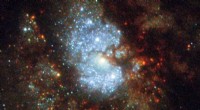
* Electromagnetic radiation from different objects: Stars, galaxies, quasars, and other celestial objects emit different types of electromagnetic radiation depending on their composition, temperature, and other properties. This is a rich and complex topic of study in astronomy and astrophysics.
To summarize: The electromagnetic spectrum is a tool to describe light, while the universe is a vast and complex system with a wide range of properties, including its own unique radiation signature.