Comets
* Composition: Primarily made of ice (water, methane, ammonia), dust, and rock. Think of them as "dirty snowballs."
* Origin: Formed in the outer reaches of the solar system, likely in the Oort Cloud or Kuiper Belt.
* Appearance: Known for their distinctive tails, which develop as the comet approaches the Sun and the ice vaporizes. The tails consist of gas (ion tail) and dust (dust tail).
* Orbit: Highly elliptical orbits, which can take them far beyond Pluto and then bring them close to the Sun.
* Notable Feature: The "coma," a fuzzy atmosphere that forms around the comet's nucleus as it warms.
Meteoroids
* Composition: Small rocky or metallic fragments, ranging in size from dust grains to boulders.
* Origin: Come from various sources, including:
* Debris left behind by comets and asteroids
* The breakup of larger asteroids
* Appearance: Not visible until they enter Earth's atmosphere, where they burn up as meteors ("shooting stars").
* Orbit: Can have a variety of orbits.
* Notable Feature: The bright streak of light they produce as they burn up in the atmosphere.
Asteroids
* Composition: Mainly rocky or metallic, though some contain water ice and organic molecules.
* Origin: Most formed in the asteroid belt between Mars and Jupiter, but some can be found elsewhere in the solar system.
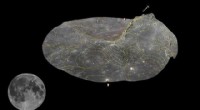
* Appearance: Generally appear as irregular, often potato-shaped objects.
* Orbit: Generally found in the asteroid belt, with orbits that are more circular than comets.
* Notable Feature: Their diversity in size, ranging from small pebbles to Ceres, the largest asteroid, which is nearly a dwarf planet.
Here's a simple way to remember the key differences:
* Comets: "Dirty snowballs" with tails
* Meteoroids: Small fragments that burn up as meteors
* Asteroids: Rocky or metallic bodies, often found in the asteroid belt
Let me know if you'd like more details about any of these celestial objects!