Here's how it applies:
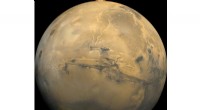
* Planets: All planets in our solar system rotate on their axis. This rotation is what causes day and night.
* Moons: Moons also rotate, though their rotation periods can vary greatly. Some moons are tidally locked to their planet, meaning they always show the same face to it.
* The Sun: Our Sun also rotates, though it's a bit more complicated than the rotation of a solid body.
Key Points:
* Rotation is a natural phenomenon: Every celestial object in our solar system has some degree of rotation.
* Rotation speed: The speed at which celestial objects rotate varies widely, from the very fast rotation of Jupiter to the slow rotation of Venus.
* Rotation axis: The axis of rotation is an imaginary line that passes through the center of the object and around which it spins.
So, when you hear about something "rotating" in the solar system, it simply means that it is spinning on its own axis.