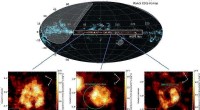
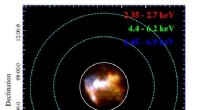
1. Supernova: This is the most common outcome. As the star exhausts its nuclear fuel, it collapses under its own gravity, triggering a massive explosion that blasts away its outer layers. The supernova leaves behind a dense remnant, either a:
* Neutron Star: A rapidly spinning, incredibly dense object composed mostly of neutrons.
* Black Hole: If the star was massive enough, the collapse is so intense that it forms a singularity, a point of infinite density from which even light cannot escape.
2. Hypernova: This is a rarer and more energetic type of supernova, often associated with the collapse of very massive stars (over 20 times the mass of the Sun). The explosion is even more powerful and leaves behind a black hole almost certainly.
3. Wolf-Rayet Star: While not a final fate, some massive stars evolve into Wolf-Rayet stars during their final stages. These are very hot, luminous stars with strong stellar winds that strip away their outer layers. Eventually, they will likely go supernova, leaving behind a neutron star or black hole.