1. Hypotheses about the Formation and Evolution of Celestial Objects:
* Hypothesis: The Milky Way galaxy formed from the merger of smaller galaxies.
* Hypothesis: The planet Mars once had liquid water on its surface.
* Hypothesis: Supermassive black holes exist at the centers of most galaxies.
2. Hypotheses about the Properties of the Universe:
* Hypothesis: The Universe is expanding at an accelerating rate.
* Hypothesis: The Universe is finite but unbounded.
* Hypothesis: Dark matter and dark energy make up the majority of the Universe's mass and energy.
3. Hypotheses about the Nature of Astronomical Phenomena:
* Hypothesis: Supernovae are caused by the collapse of massive stars.
* Hypothesis: Quasars are powered by accretion disks around supermassive black holes.
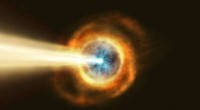
* Hypothesis: Gamma-ray bursts are the result of extremely energetic events like the merger of neutron stars.
4. Hypotheses about the Search for Extraterrestrial Life:
* Hypothesis: Life exists on other planets in our galaxy.
* Hypothesis: The conditions necessary for life are common in the Universe.
* Hypothesis: We may be able to detect signs of life on other planets through their atmospheres.
5. Hypotheses about the Future of the Universe:
* Hypothesis: The Universe will eventually cool and die in a "heat death".
* Hypothesis: The Universe will eventually collapse in a "Big Crunch".
* Hypothesis: The Universe will continue to expand forever.
These are just a few examples, and the specific hypotheses an astronomer might make depend on their area of expertise and current research interests. It's important to remember that hypotheses are just educated guesses that need to be tested through observations and experiments.