1. Parallax
* Principle: Parallax is based on the apparent shift of an object's position when viewed from two different locations. Imagine holding your finger out in front of your face and closing one eye, then the other. Your finger appears to move against the background.
* How it works: Astronomers use the Earth's orbit around the Sun as their baseline. They observe a star at two points in the Earth's orbit six months apart (when the Earth is on opposite sides of the Sun). The angle of the apparent shift is called the parallax angle. The smaller the angle, the farther the object.
* Limitations: Parallax only works for relatively nearby stars, out to about 10,000 light-years.
2. Standard Candles
* Principle: Certain types of stars have a known, consistent brightness (luminosity). Astronomers compare the apparent brightness of these stars as seen from Earth to their actual luminosity, which allows them to calculate their distance.
* Examples:
* Cepheid Variables: These are pulsating stars with a direct relationship between their pulsation period and their luminosity.
* Type Ia Supernovae: These are powerful explosions of white dwarf stars that reach a predictable peak luminosity.
* Limitations: Standard candles require careful calibration and can be affected by factors like interstellar dust that absorbs light.
3. Spectroscopic Parallax
* Principle: This method relates a star's spectral type (color) to its luminosity. Astronomers can determine a star's spectral type by analyzing its light, which tells them its surface temperature. They then use a calibrated relationship between spectral type and luminosity to estimate the star's intrinsic brightness. Comparing this to the observed brightness allows them to calculate the distance.
* Limitations: This method is less precise than other techniques, particularly for stars that are very far away.
4. Measuring Distances within Solar System
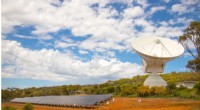
* Radar: Radar waves are bounced off planets and other bodies in the solar system, and the time it takes for the signal to return is used to calculate the distance.
* Trigonometric Parallax: Similar to parallax used for stars, this method utilizes measurements from different points on Earth to determine the distance to objects in the solar system.
5. Other Methods
* Hubble Constant: This constant relates the expansion rate of the universe to distances to galaxies.
* Cosmological Distances: Methods based on the cosmic microwave background radiation and the distribution of galaxies are used to estimate distances to very distant objects.
Important Considerations
* Accuracy: The accuracy of distance measurements varies depending on the technique used and the distance involved.
* Uncertainty: There is always some uncertainty in distance measurements, which is reflected in error bars.
* Ongoing Research: Astronomers are constantly developing and refining new techniques for measuring distances to celestial bodies.
Let me know if you'd like more details on any specific method or want to delve into specific applications!