However, we can imagine what a "Goldilocks" planet might be like based on our understanding of planetary science and the conditions necessary for life.
Here's a possible description of a "Goldilocks" planet's surface:
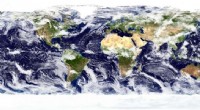
* Liquid water: The most important factor for life as we know it is the presence of liquid water. This would likely be present in oceans, lakes, rivers, or even underground aquifers.
* Atmosphere: A "Goldilocks" planet would likely have a substantial atmosphere, possibly composed of nitrogen, oxygen, carbon dioxide, and other gases. This atmosphere would help regulate the planet's temperature and protect it from harmful solar radiation.
* Landmasses: The planet could have a variety of landforms, including mountains, valleys, plains, and possibly even volcanoes.
* Vegetation: If the planet is hospitable to life, it could be covered in some form of vegetation. This could range from simple algae to complex forests.
* Temperature: The surface temperature would be mild enough for liquid water to exist, likely ranging from below freezing to above boiling point in localized areas.
* Sunlight: The planet would receive enough sunlight to sustain life, but not so much that it would cause the surface to overheat.
Important Note: This is just a hypothetical scenario. The actual surface of a "Goldilocks" planet could vary greatly depending on factors like its composition, geological history, and the nature of its star.
We are still in the early stages of discovering and characterizing exoplanets, but the search for "Goldilocks" planets is a key area of research in astrobiology.