Blue Stars: Massive and Short-Lived
* High Mass: Blue stars are incredibly massive, often several times the mass of our Sun.
* Short Lifespans: Their massive cores burn fuel at a ferocious rate, leading to a much shorter lifespan compared to smaller, cooler stars like our Sun. They might only live for a few million years.
The Path to a Black Hole
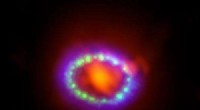
1. Supernova: When a blue star runs out of fuel, it collapses under its own gravity in a spectacular event called a supernova.
2. Remnant Core: After the explosion, a dense core remains. This core can be either:
* Neutron Star: A very compact object with incredible density.
* Black Hole: If the core is massive enough (roughly three times the Sun's mass or more), the gravity becomes so intense that even light cannot escape, forming a black hole.
Why Blue Stars are More Likely
* Mass: The more massive a star is, the stronger its gravitational pull. This increases the likelihood of a core massive enough to collapse into a black hole.
* Supernova Energy: Blue stars release more energy during their supernova, leaving behind a more massive remnant core.
In Summary
While not all blue stars become black holes, their immense mass and energetic lifecycles make them the prime candidates. Smaller stars like our Sun are much less likely to leave behind a black hole after their death.