1. Rotation Speed:
The most fundamental factor is how fast a planet spins on its axis. Planets with a faster rotation speed have shorter days. For example, Jupiter rotates incredibly fast, completing a rotation in about 10 hours, while Venus rotates incredibly slowly, taking 243 Earth days to complete a rotation.
2. Axial Tilt:
The angle at which a planet's axis of rotation is tilted relative to its orbital plane (the plane of its orbit around the sun) also affects day length. This tilt influences the length of the day at different points in the planet's year. For example, on Earth, the tilt causes the length of days to vary throughout the year, with longer days in summer and shorter days in winter.
3. Orbital Period:
While not directly affecting day length, the length of a planet's orbit around its star influences how many times it rotates during a complete orbit. This is especially relevant for planets with very long orbits, where the number of rotations during a year can be significantly different from a planet with a shorter orbit.
4. Tidal Locking:
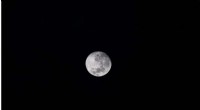
Some planets, particularly those orbiting close to their stars, can become tidally locked. This means one side of the planet always faces the star, resulting in a day length equal to the orbital period. For instance, the Moon is tidally locked to Earth, with one side always facing us.
5. Irregular Shapes:
Planets that aren't perfectly spherical can experience variations in their rotation speed due to their uneven distribution of mass. This can lead to slight variations in day length over time.
In summary:
The combination of rotation speed, axial tilt, orbital period, tidal locking, and irregular shape all contribute to the diverse range of day lengths observed in our solar system and beyond. Each planet's unique combination of these factors results in a distinct day length, making our cosmic neighborhood a truly diverse place.