Here's a breakdown:
* Inner Planets: Mercury, Venus, Earth, and Mars. These are all relatively small, rocky planets located closer to the Sun.
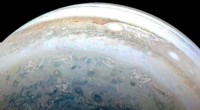
* Outer Planets: Jupiter, Saturn, Uranus, and Neptune. These are much larger gas giants located farther from the Sun.
The asteroid belt, located between Mars and Jupiter, acts as a physical and compositional divide. It's a region of countless asteroids, remnants of the early solar system.
Here's why the asteroid belt is so significant:
* Formation: The inner planets formed closer to the Sun, where temperatures were higher. This meant only rocky materials could solidify. The outer planets formed farther out, where temperatures allowed for the accumulation of ices and gases.
* Gravitational Influence: Jupiter's immense gravity disrupted the formation of a planet in the asteroid belt region, leaving behind a collection of smaller bodies.
While the asteroid belt is the most obvious divider, other differences exist between inner and outer planets:
* Size and Density: Inner planets are smaller and denser, while outer planets are much larger and less dense.
* Atmosphere: Inner planets have thin atmospheres (except for Venus), while outer planets have thick, massive atmospheres.
* Moons: Inner planets have few or no moons, while outer planets have many moons.
So, the asteroid belt acts as a dividing line between two distinct groups of planets, each with its own unique characteristics.