Earth has that Mars does have:
* Mountains: Both planets have mountains, though Earth's are generally taller due to plate tectonics.
* Canyons: The Valles Marineris on Mars is the largest canyon in the solar system, while Earth has the Grand Canyon.
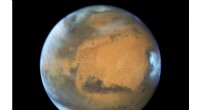
* Polar ice caps: Both planets have ice caps, but Mars' are composed mostly of frozen carbon dioxide (dry ice), while Earth's are primarily water ice.
* Evidence of past liquid water: While Earth has oceans, Mars has evidence of past liquid water in the form of dried-up riverbeds, canyons, and mineral deposits.
* Volcanoes: Both planets have volcanoes, though Earth's are more active. Mars' largest volcano, Olympus Mons, is the largest in the solar system.
Earth has that Mars does *not* have:
* Oceans: Mars does not have large bodies of liquid water on its surface.
* Plate tectonics: Mars does not have the same kind of plate tectonics that Earth does, which means its surface doesn't shift and change as much.
* Significant atmosphere: Mars' atmosphere is much thinner than Earth's and primarily composed of carbon dioxide. This means it can't hold onto heat as well, resulting in a much colder surface temperature.
* A strong magnetic field: Earth's magnetic field protects us from harmful solar radiation. Mars' magnetic field is much weaker, leaving it vulnerable to solar wind.
* Life: While evidence suggests Mars may have been habitable in the past, there is no known life on Mars today. Earth is teeming with life in a vast array of forms.
In conclusion, Mars shares some features with Earth, but it lacks the key ingredients that make Earth a habitable planet.