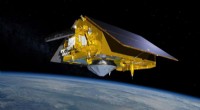
* Orbiting vs. Landing: Orbiting a planet means maintaining a specific speed and path around it. Landing requires slowing down significantly and descending through the atmosphere to the surface.
* Different Trajectories: The trajectory needed to orbit Mars is different from the trajectory needed to land on Mars.
* Fuel Requirements: A spacecraft needs a lot of fuel to slow down enough for a landing. Carrying that much fuel would make it impossible to reach Mars in the first place.
Here's how we can achieve a similar outcome:
1. Two Separate Missions: We could launch two spacecraft: one to orbit Mars and another to land on Mars. This is the most common approach.
2. A Complex Maneuver: Theoretically, a single spacecraft could be sent on a trajectory that passes Mars and then loops back to land. This would require incredibly precise navigation and a massive amount of fuel, making it extremely difficult and impractical.
Why is it important to differentiate between orbiting and landing?
* Scientific Purposes: Orbiting spacecraft can observe the entire planet, providing global context. Landers can collect close-up data and samples from a specific location.
* Cost and Complexity: Landing is much more challenging than orbiting, requiring complex landing systems and heat shields.
Example:
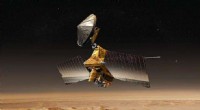
* The Mars Reconnaissance Orbiter currently orbits Mars, providing high-resolution images and data.
* The Perseverance rover landed on Mars, exploring the surface and collecting samples.
In conclusion, while it's not possible to directly "put a satellite past Mars but land on Mars" with a single spacecraft, we can achieve a similar outcome by launching separate missions or using complex maneuvers that are very difficult to execute.