1. Observing its position over time:
* Multiple Observations: The most reliable method is to take multiple observations of the comet's position over a period of time.
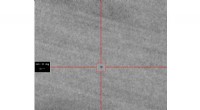
* Comparing positions: Compare the comet's position against the background stars. If the comet is moving, its position will change relative to the stars.
* Plotting the movement: Plot the comet's positions on a star chart or celestial map. Connect the dots to show the comet's path, indicating its direction of movement.
2. Using astronomical software and databases:
* Ephemeris data: Professional and amateur astronomers use software like Stellarium, SkySafari, or the Minor Planet Center's website to access ephemeris data.
* Ephemeris: This data provides the comet's predicted position and movement over time.
3. Understanding orbital mechanics:
* Orbital Elements: Comets, like other celestial bodies, follow predictable paths. Astronomers can calculate a comet's orbital elements (like its perihelion, aphelion, inclination, and eccentricity) from observations.
* Orbital Path: These elements allow astronomers to determine the comet's orbital path and predict its future direction of movement.
4. Using the Doppler effect:
* Spectroscopy: Spectroscopic analysis of the comet's light can reveal information about its velocity and direction of motion.
* Blue or Red Shift: If the light is shifted towards blue, it indicates the comet is moving towards us. If it's shifted towards red, it indicates the comet is moving away.
5. Observing its tail:
* Tail Direction: Comets' tails always point away from the sun, regardless of the comet's direction of movement.
* Solar Wind: The tail is formed by the sun's solar wind pushing away gas and dust from the comet's nucleus.
Important Note: While these methods can provide a good idea of a comet's movement, it's important to remember that comets' paths can be influenced by various factors like gravitational forces from planets, making their movements unpredictable in the long term.