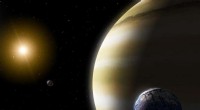
* Gravity and Stars: Stars are held together by their own gravity. This force pulls all their matter towards the center, preventing them from flying apart.
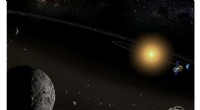
* Orbital Motion: Stars are typically found in galaxies, where they orbit a common center of gravity (like a black hole or the galaxy's core). They are constantly in motion, not "falling" in the usual sense.
* No Solid Ground: Unlike objects on Earth, stars have no solid surface to fall onto. They are massive balls of gas and plasma.
* Cosmic Scale: The distances between stars are immense. It's like saying a grain of sand on the beach "falls" to another grain of sand across the ocean – the concept doesn't really apply.
What Happens to Stars?
* Stellar Evolution: Over billions of years, stars go through different stages of evolution. Some stars eventually run out of fuel and collapse, leading to:
* White Dwarfs: Small, dense remnants of stars.
* Neutron Stars: Extremely dense, spinning objects formed from supernova explosions.
* Black Holes: Regions of space where gravity is so strong that nothing, not even light, can escape.
* Supernova Explosions: Massive stars can end their lives in a spectacular supernova explosion, scattering material into space.
Key Point: Stars don't "fall" in the traditional sense. Their behavior is governed by gravity, orbital motion, and the processes of stellar evolution.