1. Clear Skies:
Deserts are known for their dry climate and minimal cloud cover. This provides astronomers with more opportunities to observe the night sky without interruption.
2. Dark Skies:
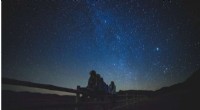
Deserts are generally far from city lights, which can interfere with astronomical observations. The lack of light pollution allows astronomers to see fainter objects in the sky.
3. Stable Atmosphere:
The air in deserts is typically very stable, meaning there is less atmospheric turbulence. This reduces the blurring of astronomical images caused by atmospheric distortion.
4. High Altitude:
Many deserts are located at high altitudes. This is beneficial because the atmosphere is thinner at higher altitudes, leading to less atmospheric distortion and less absorption of light.
5. Remote Location:
Deserts are often remote and sparsely populated, which minimizes light pollution and other disturbances from human activity.
6. Accessibility:
While some deserts are remote, they are often accessible by road or air, making it easier to transport equipment and personnel.
Examples of Famous Observatories in Deserts:
* Mauna Kea Observatory (Hawaii): Located on the dormant volcano Mauna Kea, this observatory is known for its exceptionally dark skies and high altitude.
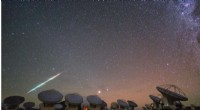
* Atacama Desert Observatory (Chile): The Atacama Desert is one of the driest places on Earth, providing ideal conditions for astronomical observations.
* Paranal Observatory (Chile): Also located in the Atacama Desert, this observatory houses the Very Large Telescope (VLT), one of the most powerful telescopes in the world.
* Kitt Peak National Observatory (Arizona): Located on Kitt Peak in the Sonoran Desert, this observatory has a large collection of telescopes.
These are just a few examples of why deserts are excellent locations for building and operating telescopes. The combination of factors mentioned above provides astronomers with the best possible conditions for observing the universe.