Here's why:
* Hydrogen is the most abundant element in stars. When a star burns, hydrogen atoms fuse together to form helium, releasing enormous amounts of energy.
* This energy is emitted as light. The color of the light depends on the temperature of the star. Hotter stars emit more blue light, while cooler stars emit more red light.
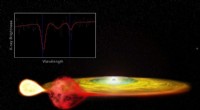
* Hydrogen emits light at specific wavelengths. This means that hydrogen atoms in stars don't just emit a continuous spectrum of colors, but rather distinct lines of light. The most prominent line is in the blue-green region, making it a significant contributor to the overall color of the star.
So, while we can't say hydrogen is "blue-green" in the stars, it plays a crucial role in creating the overall color spectrum we observe. The final color of a star is influenced by a complex interplay of its temperature, composition, and other factors.