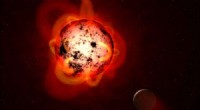
* Hypernova: An extremely powerful supernova explosion, thought to be the death of very massive stars. It's a singular event with a tremendous burst of energy and radiation.
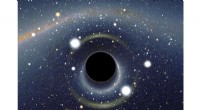
* Black hole: A region of spacetime where gravity is so strong that nothing, not even light, can escape. Black holes exist continuously, and their danger lies in their gravitational pull.
Which is more dangerous?
* Danger to nearby objects: A hypernova would be far more immediately dangerous to anything within a few light-years due to its immense energy release. It would obliterate planets and stars in the immediate vicinity.
* Long-term danger: A black hole is a far more long-term threat. Its gravitational pull can disrupt entire star systems and even galaxies over vast spans of time.
Here's a simplified analogy:
Imagine a bomb (hypernova) and a giant vacuum cleaner (black hole). The bomb explodes violently and immediately destroys everything nearby. The vacuum cleaner sucks up things over a long period of time, eventually cleaning out a large area.
So, it depends on what you mean by "dangerous":
* Immediate threat: Hypernova is more dangerous.
* Long-term threat: Black hole is more dangerous.
Important note: It's important to remember that both hypernovae and black holes are incredibly powerful phenomena. We are lucky that our own Sun is not massive enough to become a hypernova, and that there are no known black holes close enough to pose a direct threat to our solar system.