Here's a breakdown of how the Big Bang fits into the story of Earth's origin:
1. The Big Bang:
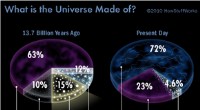
* Approximately 13.8 billion years ago, the universe began as an incredibly hot, dense point.
* This point expanded rapidly, cooling down and becoming less dense over time.
* The Big Bang created the fundamental building blocks of the universe: hydrogen, helium, and trace amounts of other light elements.
2. Formation of Stars and Galaxies:
* Over millions of years, these light elements coalesced under gravity, forming clouds of gas.
* These clouds collapsed further, eventually triggering nuclear fusion and creating stars.
* Stars gathered into galaxies, with some of them containing heavy elements forged in their cores.
3. Formation of Earth:
* After the first stars, the universe contained heavier elements like iron, silicon, and oxygen.
* These elements formed a disk around a young star, the Sun.
* Over millions of years, dust and gas within this disk accreted (clumped together) to form Earth and other planets.
Therefore, the Big Bang sets the stage for the creation of the elements that ultimately formed Earth, but it doesn't directly explain how the planet itself came to be. The processes leading to Earth's formation are part of the broader field of planetary science, which explores the formation and evolution of planets and other celestial bodies within our solar system and beyond.