Here's a breakdown:
* Electromagnetic radiation: This is a form of energy that travels in waves. Examples include light, radio waves, X-rays, and gamma rays.
* Telescopes: These are instruments designed to gather and focus electromagnetic radiation, allowing us to study distant objects in space.
How telescopes work:
* Different types of telescopes are designed to detect different wavelengths of electromagnetic radiation:
* Optical telescopes: These detect visible light, the kind our eyes can see.
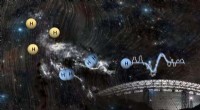
* Radio telescopes: These detect radio waves.
* Infrared telescopes: These detect infrared radiation, which is heat.
* Ultraviolet telescopes: These detect ultraviolet radiation, which is higher energy than visible light.
* X-ray telescopes: These detect X-rays, which are even higher energy than ultraviolet radiation.
* Gamma-ray telescopes: These detect gamma rays, the highest energy form of electromagnetic radiation.
* By studying the electromagnetic radiation coming from celestial objects, we can learn a lot about them:
* Composition: The elements and molecules present in an object can be identified by the wavelengths of light it emits.
* Temperature: The intensity of the radiation tells us about an object's temperature.
* Motion: The Doppler effect, which shifts the wavelengths of light due to motion, can tell us if an object is moving towards or away from us.
* Structure: By studying the patterns of radiation, we can learn about the shapes and sizes of celestial objects.
In summary: Telescopes are tools that observe and study electromagnetic radiation, providing us with invaluable insights into the universe. They don't "have" the radiation themselves; they simply act as detectors.