Condensation and Concentration:
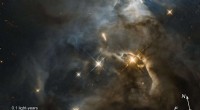
* Yes, matter can condense and become concentrated. This happens in giant clouds of gas and dust called nebulae.
* Gravity plays a crucial role. As particles in the nebula clump together, their combined gravity pulls in more matter, causing the cloud to collapse further. This collapse increases the density and temperature at the center of the cloud.
Star Formation:
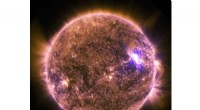
* If the core of the collapsing nebula becomes dense and hot enough, nuclear fusion begins. This is the process where hydrogen atoms fuse to form helium, releasing tremendous energy. This energy outward pressure balances the inward pull of gravity, stabilizing the star.
Planet Formation:
* While the star is forming, leftover material in the nebula orbits the new star in a flat disk. This disk is called a protoplanetary disk.
* Dust grains in the disk collide and stick together, growing larger over time. This process is called accretion.
* Eventually, these larger clumps of matter become planetesimals, which can continue to accrete more material until they become planets.
So, the answer to your question is yes, but with some caveats:
* Condensation and concentration are necessary, but not sufficient. The collapsing nebula needs to reach a critical mass and temperature for star formation to occur.
* Planets form from the leftover material around a star, not directly from the condensation of the original nebula.
Let me know if you have any other questions about star or planet formation!