1. Massive Stars and Gravity's Grip:
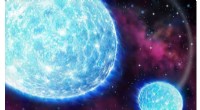
* Giant Stars: Black holes are born from the death of extremely massive stars, many times larger than our Sun.
* Nuclear Fusion: These stars generate energy through nuclear fusion in their core, creating outward pressure that balances the inward pull of gravity.
* Fuel Depletion: Eventually, the star runs out of fuel for fusion. The core collapses under its own immense gravity.
2. The Collapse and the Singularity:
* Core Collapse: As the core implodes, the material is squeezed into an incredibly tiny space. This is the beginning of a black hole.
* Singularity: All the mass of the star is compressed into a single point of infinite density called a singularity. Think of it as a point with no volume but containing immense mass.
3. Event Horizon Formation:
* Escape Velocity: The singularity creates an incredibly strong gravitational field. The escape velocity – the speed needed to escape the gravitational pull – becomes greater than the speed of light.
* Event Horizon: The point of no return is called the event horizon. Anything that crosses the event horizon, including light, can never escape.
4. The Black Hole's Characteristics:
* Mass: Black holes have mass, just like any other object. They can range in size from stellar-mass black holes (a few times the mass of the Sun) to supermassive black holes at the center of galaxies (billions of times the mass of the Sun).
* Gravity Well: The singularity acts as a bottomless pit of gravity, attracting any matter that comes close.
* Distortion of Spacetime: The intense gravity of a black hole warps the fabric of spacetime, causing the fabric to curve inward around the singularity. This is why light is bent around black holes.
Important Notes:
* No Direct Observation: Black holes are incredibly dense and dark. We can't see them directly.
* Indirect Evidence: Scientists detect black holes through their gravitational influence on nearby objects (like stars orbiting around them) and the X-rays emitted by material spiraling into them.
* Formation of Galaxies: Supermassive black holes play a crucial role in the formation and evolution of galaxies, influencing the distribution of matter and the birth of stars.
Let me know if you'd like to explore any of these aspects in more detail!