1. Birth: A star is born from a collapsing cloud of gas and dust.
2. Main Sequence: The star spends most of its life in the main sequence, fusing hydrogen into helium in its core, generating energy and shining brightly.
3. Red Giant Phase: Once the hydrogen fuel runs out, the star expands into a red giant, fusing heavier elements like helium and carbon in its core.
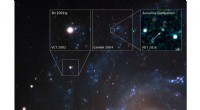
4. Supernova (for massive stars): Stars more massive than our sun (8 times or more) eventually exhaust their nuclear fuel, causing their core to collapse under their own gravity. This collapse triggers a catastrophic explosion, a supernova, releasing enormous amounts of energy and creating heavy elements.
5. Remnant: After the supernova explosion, the star leaves behind a remnant:
* Neutron Star: If the star was medium-sized (8-20 times the mass of our sun), the core collapses into a dense, rapidly spinning neutron star.
* Black Hole: For the most massive stars (over 20 times the sun's mass), the core collapses completely, forming a black hole.
Therefore, a supernova is the event that ends a star's life, marking the transition from a star to a stellar remnant like a neutron star or a black hole. The materials ejected in the supernova contribute to the interstellar medium, providing the building blocks for new stars and planets.