1. Using the Telescope for Astronomical Observations:
Galileo wasn't the inventor of the telescope, but he was the first to use it for systematic astronomical observation. His discoveries revolutionized our understanding of the universe:
* Phases of Venus: Observing the phases of Venus proved that it orbited the Sun, not Earth, supporting the heliocentric model.
* Moons of Jupiter: Discovering Jupiter's moons demonstrated that not all celestial bodies revolved around Earth.
* Sunspots: His observation and analysis of sunspots challenged the idea of a perfect, unchanging Sun.
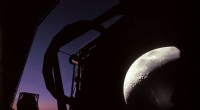
* Lunar surface: His observations of the Moon's surface revealed its rough, cratered nature, shattering the long-held belief of a smooth, perfect sphere.
2. Developing the Scientific Method:
Galileo championed the idea of observation, experimentation, and mathematical analysis in understanding the natural world. This approach, while not solely his invention, was greatly advanced by his work. He emphasized:
* Observation and Experimentation: He conducted experiments like rolling balls down inclined planes to study gravity, pioneering the use of controlled experiments in science.
* Mathematical Analysis: He used mathematics to describe and interpret his observations, leading to precise laws that governed natural phenomena.
* Challenge to Authority: He challenged the accepted wisdom of the time, even contradicting the Church's teachings when his observations contradicted them.
The Importance of Both:
Galileo's telescopic observations provided strong evidence for the heliocentric model, challenging the established geocentric view and setting the stage for the Scientific Revolution. His use of the scientific method laid the groundwork for modern scientific inquiry, emphasizing observation, experimentation, and mathematical analysis.
Ultimately, his combination of revolutionary astronomical discoveries and his embrace of the scientific method made him a truly transformative figure in the history of science.