1. Measuring within our Solar System:
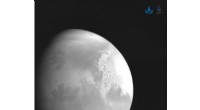
* Radar: For nearby planets like Venus and Mars, we can bounce radio waves off their surfaces and measure the time it takes for the signal to return. This gives us a precise distance.
* Parallax: This is like holding your finger out and looking at it with one eye closed, then the other. The apparent shift of your finger against the background gives you a measure of its distance. In astronomy, we use the Earth's orbit as our "two eyes" and observe a planet's position relative to distant stars at different points in our orbit. This shift allows us to calculate its distance.
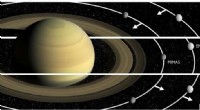
* Kepler's Third Law: This law relates a planet's orbital period (how long it takes to go around the Sun) to its average distance from the Sun. If we know a planet's orbital period, we can calculate its average distance.
2. Measuring between stars:
* Parallax: This method still works, but we use the Earth's orbit as our baseline and measure the shift of a distant star against background stars. This is effective for stars up to a few thousand light-years away.
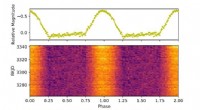
* Standard Candles: Some stars, like Cepheid variable stars and Type Ia supernovae, have predictable brightness. By comparing their apparent brightness with their known intrinsic brightness, we can calculate their distance.
* Redshift: The light from distant galaxies is stretched due to the expansion of the universe, causing its wavelength to shift towards red. This redshift is proportional to the galaxy's distance.
Important Points:
* Light-years: Distances between planets and stars are often measured in light-years, which is the distance light travels in one year (about 6 trillion miles).
* Astronomical Units (AU): Within our solar system, we use the average distance between the Earth and the Sun (about 93 million miles) as a unit of measurement called the Astronomical Unit (AU).
* Constant refinement: Astronomers are constantly refining their measurement techniques and developing new methods to improve our understanding of the universe.
Let me know if you'd like more details about any of these methods.