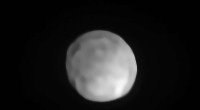
1. Discovery of Other Similar Objects: In the late 20th century, astronomers started discovering numerous objects in the Kuiper Belt, a region beyond Neptune. These objects, including Eris, were similar in size and composition to Pluto. This raised questions about whether Pluto should be considered unique or just one of many.
2. Lack of Gravitational Dominance: The International Astronomical Union (IAU) established a formal definition of a planet in 2006. One of the key criteria was that a planet must have cleared its neighborhood of other objects. Pluto, however, shares its orbital space with many other objects in the Kuiper Belt, meaning it doesn't exert enough gravitational dominance to be considered a planet.
3. Need for Consistency and Clarity: The discovery of similar objects and the lack of a clear definition for a planet led to confusion and inconsistency in the scientific community. The IAU's new definition aimed to provide a clear framework for classifying celestial objects.
4. Eris, the Trigger: The discovery of Eris, which is larger than Pluto, was a significant factor in the reclassification. If Pluto was considered a planet, Eris would also have to be classified as one, leading to the recognition of many more planets in our solar system.
5. Dwarf Planets - A New Category: Instead of simply demoting Pluto, the IAU introduced a new category called "dwarf planets." This category recognizes objects that meet some, but not all, of the criteria for being a planet. Pluto, Eris, Ceres, Makemake, and Haumea are currently recognized as dwarf planets.
In summary, the reclassification of Pluto was driven by:
* The discovery of other similar objects in the Kuiper Belt.
* The lack of a clear definition of a planet, leading to confusion and inconsistencies.
* The need for a more consistent and scientifically sound classification system.
* The discovery of Eris, which is larger than Pluto, highlighting the need for a new category.
The reclassification of Pluto is a testament to the ever-evolving nature of scientific understanding. As our knowledge of the universe grows, we refine our definitions and classifications to better understand the vast and complex celestial objects that populate our solar system and beyond.