Here's why:
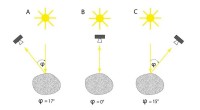
* Earth's Tilt: The Earth is tilted on its axis. This tilt causes different parts of the world to receive varying amounts of sunlight throughout the year.
* Polar Regions: The Arctic Circle and the Antarctic Circle are located at the top and bottom of the Earth, respectively. They experience extreme variations in sunlight due to the Earth's tilt.
* Summer Solstice: During the summer solstice in the Northern Hemisphere, the Arctic Circle experiences 24 hours of daylight. At the same time, the Antarctic Circle experiences 24 hours of darkness.
* Winter Solstice: During the winter solstice in the Northern Hemisphere, the Arctic Circle experiences 24 hours of darkness. At the same time, the Antarctic Circle experiences 24 hours of daylight.
Therefore, when one polar circle experiences daylight, the other experiences night.