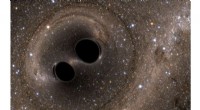
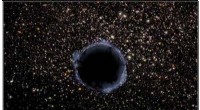
* Mass is the key: Black holes form when a massive star collapses under its own gravity. The star needs to be at least several times the mass of our sun. Jupiter is much smaller than our sun, about 1/1000th its mass.
* Not enough gravity: Jupiter doesn't have the immense gravitational pull necessary to collapse into a black hole. Even if it somehow exploded, the resulting material would disperse outwards rather than collapsing inwards.
* Possible outcomes: If Jupiter somehow exploded, the most likely outcome would be a massive cloud of gas and dust, spreading outwards through the solar system. This would likely cause significant disruption to the orbits of other planets, but not the creation of a black hole.
It's important to note that Jupiter exploding is highly unlikely in the first place. It's a gas giant, not a star, and does not have the internal conditions to undergo a supernova-like explosion.