Irregular Galaxies
* Shape: Lack a defined shape. They appear chaotic and asymmetrical.
* Structure: No clear spiral arms, bulge, or disk. Stars, gas, and dust are distributed randomly.
* Formation: Often formed through collisions or interactions between other galaxies.
* Examples: The Large and Small Magellanic Clouds, the Antennae Galaxies.
Elliptical Galaxies
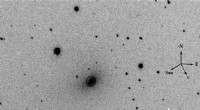
* Shape: Smooth, oval-shaped, with a gradual decrease in brightness from the center outwards.
* Structure: Lack spiral arms, have a large central bulge, and sometimes a faint halo.
* Formation: Likely formed through mergers of smaller galaxies.
* Examples: M87, NGC 4649, NGC 5128.
Key Differences:
* Shape and Structure: The most obvious difference. Irregular galaxies are jumbled and misshapen, while ellipticals are smooth and oval.
* Rotation: Elliptical galaxies generally rotate slowly, while irregular galaxies often have more chaotic, uneven rotation.
* Star Formation: Irregular galaxies tend to have ongoing star formation, while elliptical galaxies have low rates of star formation.
* Dust and Gas: Elliptical galaxies have less gas and dust than irregular galaxies, which contributes to their lack of star formation.
Summary Table:
| Feature | Irregular Galaxy | Elliptical Galaxy |
|--------------|--------------------|--------------------|
| Shape | Chaotic, Asymmetrical | Smooth, Oval |
| Structure | No defined structure | Bulge, Halo |
| Rotation | Chaotic, Uneven | Slow and Smooth |
| Star Formation | Active | Low or None |
| Dust & Gas | Abundant | Sparse |
| Examples | Large and Small Magellanic Clouds, Antennae Galaxies | M87, NGC 4649, NGC 5128 |
Additional Notes:
* Irregular galaxies are relatively rare compared to elliptical and spiral galaxies.
* The classification of galaxies is complex, and there are some galaxies that fall somewhere between these two categories.