1. Temperature and Pressure:
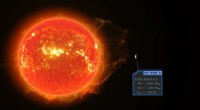
* Sun: The Sun's core has an incredibly high temperature (around 15 million degrees Celsius) and immense pressure due to its massive gravity. These conditions are necessary to overcome the electrostatic repulsion between positively charged atomic nuclei and force them to fuse.
* Earth: The Earth's core, while hot, is nowhere near the Sun's core temperature and pressure. The highest temperatures on Earth are found in volcanic eruptions, reaching around 1,200 degrees Celsius, far too low for fusion.
2. Fuel:
* Sun: The Sun is primarily composed of hydrogen, the simplest element, which serves as the primary fuel for fusion.
* Earth: Earth's core primarily consists of iron and nickel, elements that are too heavy for fusion under natural conditions.
3. Gravity:
* Sun: The Sun's immense gravity confines the hydrogen fuel and provides the necessary pressure for fusion to occur.
* Earth: Earth's gravity is far weaker than the Sun's, and it cannot hold a sufficiently dense and hot core to sustain fusion.
4. Confinement:
* Sun: The Sun's immense gravity acts as a natural "confinement" mechanism, holding the fuel and keeping the fusion reaction going.
* Earth: On Earth, it is incredibly challenging to achieve the necessary confinement conditions to sustain fusion. This is why scientists are working on developing technologies like magnetic confinement fusion and inertial confinement fusion to create the conditions needed for fusion to occur artificially.
In summary, the Sun's extreme temperature, pressure, gravitational pull, and abundance of hydrogen fuel create the perfect conditions for fusion reactions to occur. Earth, on the other hand, lacks the necessary ingredients and conditions for natural fusion.