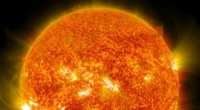
* No internal combustion: Unlike stars, gas giants don't have the necessary ingredients or conditions for a nuclear fusion reaction. Nuclear fusion is the source of the immense energy that powers stars and drives their explosions (supernovae).
* Gravity reigns supreme: The immense gravity of gas giants compresses their interiors, keeping them stable. This pressure is far greater than any internal pressure that could cause an explosion.
* No solid core: Gas giants are primarily composed of hydrogen and helium, with no solid core to act as a focal point for a potential explosion.
However, gas giants can experience dramatic events:
* Atmospheric storms: These are huge, swirling storms that can be incredibly powerful, but they are confined to the outer layers of the planet.
* Gravitational collapse: In very extreme circumstances, a gas giant could undergo gravitational collapse if its internal pressure becomes too great, leading to a collapse into a denser object like a white dwarf or neutron star. However, this is incredibly rare and would require a very unusual set of circumstances.
In conclusion: While gas giants are dynamic and can experience dramatic events, they are unlikely to explode in the way we think of traditional explosions. Their immense gravity and lack of the necessary ingredients for a nuclear fusion reaction prevent this.