Composition and Structure:
* Diamond Planets: Planets like 55 Cancri e, composed primarily of crystallized carbon, are extremely rare and hold fascinating properties.
* Gas Giants with No Solid Core: Some gas giants, like Jupiter, might lack a solid core, making their structure quite unusual.
* "Hot Jupiters": These planets are gas giants that orbit incredibly close to their stars, creating extreme temperatures and atmospheric conditions.
Orbit and Environment:
* Circumbinary Planets: These planets orbit two stars simultaneously, creating a complex gravitational dance.
* Planets with Multiple Moons: While Saturn is known for its many moons, planets with an unusual number or unique characteristics of their moons could be considered unique.
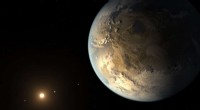
* Super-Earths: These planets are larger than Earth but smaller than Neptune, with potential for diverse and interesting environments.
* "Rogue Planets": These planets wander through space without orbiting a star, making them truly unique in their existence.
Other Interesting Aspects:
* Planets with Active Volcanoes: Planets like Io (a moon of Jupiter) exhibit intense volcanic activity, indicating unusual internal processes.
* Planets with Rings: While Saturn's rings are famous, other planets might possess unique ring systems with different compositions and structures.
* Planets with Strong Magnetic Fields: The presence of a strong magnetic field, like Earth's, can protect a planet from harmful solar radiation and contribute to its unique environment.
Ultimately, the "uniqueness" of a planet depends on the perspective and criteria used for comparison. Every celestial body holds potential for unique discoveries and insights into the vast diversity of our universe.