1. Earth-based Observations:
* Telescopic Observations: Galileo Galilei first observed Jupiter in 1610, discovering its four largest moons (Io, Europa, Ganymede, and Callisto). Since then, telescopes have revealed the planet's atmospheric bands, the Great Red Spot, and even its faint rings.
* Spectroscopy: By analyzing light from Jupiter, scientists can determine its composition (mostly hydrogen and helium) and atmospheric temperature.
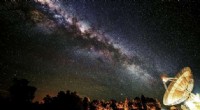
* Radio Telescopes: Radio waves from Jupiter reveal information about its magnetic field and its auroras (similar to Earth's Northern Lights).
2. Spacecraft Missions:
* Pioneer 10 and 11: The first spacecraft to fly by Jupiter in the early 1970s, providing close-up images and data about its atmosphere, magnetic field, and moons.
* Voyager 1 and 2: Provided detailed images of Jupiter's Great Red Spot, its rings, and its volcanic moon Io.
* Galileo: Orbited Jupiter for eight years, sending back extensive data about its atmosphere, magnetic field, and moons.
* Juno: Currently orbiting Jupiter, studying its gravity field, magnetic field, and deep atmospheric structure.
3. Mathematical Models:
* Computational simulations: Using data from spacecraft missions and Earth-based observations, scientists develop computer models to simulate Jupiter's atmosphere, magnetic field, and internal structure.
* Gravitational modeling: Studying the orbits of Jupiter's moons helps us understand its mass and its gravitational pull.
4. Future Missions:
* Europa Clipper: A future mission dedicated to studying Europa, a moon of Jupiter believed to harbor a subsurface ocean.
* Other future missions: Scientists are actively developing plans for future missions to explore Jupiter and its moons in greater detail.
By combining all these methods, scientists continue to unravel the mysteries of Jupiter, gaining a deeper understanding of its formation, composition, and dynamics.