Here's why Io is so volcanically active compared to Europa:
1. Tidal Heating:
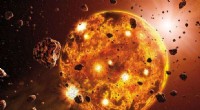
* Io: Io orbits Jupiter very closely and experiences intense gravitational forces from Jupiter and its other moons. These forces create immense tidal stresses that deform Io's interior, generating tremendous heat. This heat drives the volcanic activity.
* Europa: Europa orbits further out from Jupiter than Io and experiences less intense tidal forces. This results in less internal heating.
2. Internal Composition:
* Io: Io is composed primarily of rock and is thought to have a molten sulfurous ocean beneath its surface. This molten material is easily erupted as lava.
* Europa: Europa is primarily composed of water ice. While it may have a subsurface ocean of liquid water, the surface is frozen. This frozen surface prevents large-scale volcanic eruptions like those seen on Io.
3. Cryovolcanism on Europa:
While Europa may not have lava volcanoes, its surface shows evidence of cryovolcanic activity. This involves the eruption of water, ice, and other materials from beneath the surface, forming features like:
* Lenticulae: Circular, dome-shaped features with smooth surfaces.
* Promontories: Elevated ridges and plateaus.
* Fractures and ridges: Linear features indicating tectonic activity.
In summary, the difference in volcanic activity between Io and Europa is mainly due to the intensity of tidal heating and the differences in internal composition. While Io experiences powerful volcanic eruptions due to intense tidal forces and a rocky composition, Europa's ice-dominated surface and weaker tidal forces contribute to its cryovolcanic activity.