Light Microscopes:
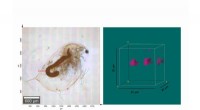
* Use light: They use visible light to illuminate the specimen.
* Limited resolution: The resolution (ability to distinguish fine detail) is limited by the wavelength of light, which is relatively long. The maximum resolution is about 200 nanometers.
* Simple preparation: Specimens can be viewed in their natural state or stained to enhance contrast.
* Less expensive: Generally more affordable than electron microscopes.
* Live imaging: Can be used to observe living organisms.
Electron Microscopes:
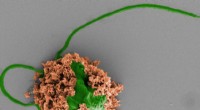
* Use electrons: They use a beam of electrons to illuminate the specimen.
* High resolution: Electrons have a much shorter wavelength than light, allowing for much higher resolution (down to 0.1 nanometers).
* Complex preparation: Specimens must be specially prepared, often involving dehydration, coating with metal, and viewed in a vacuum.
* Expensive: Electron microscopes are significantly more expensive to purchase and maintain.
* No live imaging: The harsh conditions required for electron microscopy kill living organisms.
Here's a table summarizing the key differences:
| Feature | Light Microscope | Electron Microscope |
|---|---|---|
| Illumination Source | Visible light | Beam of electrons |
| Resolution | ~200 nanometers | ~0.1 nanometers |
| Specimen Preparation | Simple | Complex |
| Cost | Less expensive | More expensive |
| Live imaging | Possible | Not possible |
In short:
* Light microscopes are best for viewing larger structures in their natural state, while electron microscopes are better for viewing very small objects with high detail.
* Electron microscopes are ideal for viewing viruses, atoms, and the internal structure of cells.
Let me know if you'd like to know more about specific types of electron microscopes or their applications.