Here's why:
* Natural Satellites: Planets in our solar system have natural satellites, which are more commonly known as moons. These are celestial bodies that orbit the planet due to gravity.
* Artificial Satellites: These are human-made objects that orbit Earth.
Here's the number of natural satellites (moons) for each planet in our solar system:
* Mercury: 0
* Venus: 0
* Earth: 1 (the Moon)
* Mars: 2 (Phobos and Deimos)
* Jupiter: 79+ (more than 79, but the exact number is still being determined)
* Saturn: 82+ (more than 82, but the exact number is still being determined)
* Uranus: 27
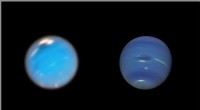
* Neptune: 14
It's important to note that the number of moons for Jupiter and Saturn is constantly changing as new moons are discovered.