Stellar Astrophysics:
* Stellar Evolution: Studies the life cycle of stars, from their birth in nebulae to their eventual death as white dwarfs, neutron stars, or black holes.
* Stellar Structure: Investigates the internal composition and physical processes within stars, including nuclear fusion, energy transport, and magnetic fields.
* Stellar Atmospheres: Focuses on the outer layers of stars, their spectra, and the processes that create stellar winds and flares.
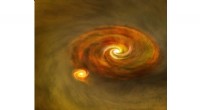
* Binaries and Multiple Star Systems: Studies the interactions and evolution of two or more stars gravitationally bound to each other.
* Exoplanets: Explores planets orbiting stars other than our Sun, their formation, properties, and habitability.
Galactic Astrophysics:
* Galaxy Formation and Evolution: Studies the origins, growth, and transformation of galaxies over cosmic time.
* Galaxy Dynamics: Investigates the motions of stars, gas, and dark matter within galaxies, and their gravitational interactions.
* Galactic Structure: Examines the distribution of matter, including stars, gas clouds, and dark matter, within galaxies.
* Active Galactic Nuclei (AGN): Studies supermassive black holes at the centers of galaxies and their powerful emissions, including jets and quasars.
Cosmology:
* The Big Bang: Explores the origin, evolution, and large-scale structure of the Universe.
* Cosmic Microwave Background Radiation: Studies the relic radiation from the Big Bang, which provides crucial information about the early Universe.
* Dark Matter and Dark Energy: Investigates the mysterious constituents of the Universe that cannot be seen directly but exert gravitational influence.
* Inflation: Studies the period of rapid expansion in the early Universe, which is thought to have smoothed out inhomogeneities.
High-Energy Astrophysics:
* Neutron Stars and Black Holes: Studies the physics of these extreme objects, their gravitational fields, and their role in astrophysical phenomena.
* Active Galactic Nuclei (AGN): Examines the high-energy processes occurring in the accretion disks and jets surrounding supermassive black holes.
* Gamma-Ray Astronomy: Uses gamma rays to study the most energetic phenomena in the Universe, such as supernovae and gamma-ray bursts.
* Cosmic Rays: Studies the high-energy particles from space that bombard Earth, revealing information about the most violent events in the Universe.
Other Sub-Branches:
* Solar Physics: Focuses on the Sun, its structure, activity, and influence on Earth.
* Planetary Science: Studies planets, moons, asteroids, comets, and other objects in our solar system.
* Astrobiology: Searches for life beyond Earth and investigates the conditions necessary for life to arise and evolve.
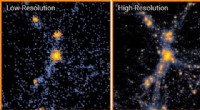
* Computational Astrophysics: Uses computer simulations to model astrophysical phenomena and test theories.
This list isn't exhaustive, and there are many specialized areas within astrophysics. Each sub-branch uses a combination of observational data, theoretical models, and numerical simulations to understand the Universe.