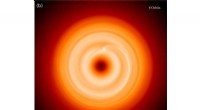
Here's why:
* Interference: The key principle is that light waves from different telescopes can interfere with each other, creating a combined image with higher resolution than any single telescope could achieve alone.
* Combining Images: The process involves capturing data from multiple telescopes simultaneously and then using complex algorithms to combine the data into a single, high-resolution image.
Key Benefits of Interferometry:
* Increased Angular Resolution: Interferometry allows astronomers to see much finer details in celestial objects than would be possible with a single telescope.
* Improved Sensitivity: Combining the light from multiple telescopes increases the overall signal, making it possible to detect fainter objects.
* Greater Observation Capabilities: Interferometers can be used to observe a wider range of wavelengths than single telescopes.
Examples of Famous Interferometers:
* The Very Large Array (VLA) in New Mexico, USA: A radio interferometer with 27 telescopes arranged in a Y-shaped configuration.
* The European Southern Observatory's Very Large Telescope Interferometer (VLTI) in Chile: An optical interferometer with four 8.2-meter telescopes.
* The Atacama Large Millimeter/submillimeter Array (ALMA) in Chile: A radio interferometer with 66 antennas.
Let me know if you'd like to delve into specific types of interferometry or learn more about any of these examples.