Here's why it's exciting:
* It's not alone! Our solar system isn't the only one with planets. It means that planet formation is a common process, and that potentially, there are other worlds out there that could support life.
* Amazing diversity! Exoplanets come in all shapes and sizes, from giant gas planets to smaller, rocky worlds. Some orbit their stars incredibly close, while others are far out, like our own outer planets.
* New insights! Studying exoplanets helps us understand how planets form, how they evolve, and how our own solar system fits into the larger picture of the cosmos.
We use various methods to detect exoplanets, including:
* Transit method: Looking for dips in a star's brightness as a planet passes in front of it.
* Radial velocity method: Measuring the "wobble" of a star caused by the gravitational pull of an orbiting planet.
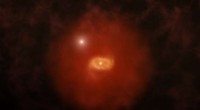
* Direct imaging: Taking pictures of exoplanets directly, which is very challenging but becoming more common.
The discovery of exoplanets is a major field of research, and new discoveries are happening all the time. It's a fascinating and exciting time to be exploring the universe!