The idea that the Earth revolves around the Sun, known as the heliocentric model, is a cornerstone of modern astronomy. Here's a breakdown of the theory and its historical development:
1. Early Ideas:
* Ancient Greece: While many ancient civilizations believed in a geocentric model (Earth at the center), some Greek philosophers like Aristarchus of Samos (3rd century BC) proposed a heliocentric model based on observations of celestial movements. However, this model lacked observational support and was rejected by the dominant geocentric view.
2. The Rise of the Geocentric Model:
* Ptolemy: In the 2nd century AD, Claudius Ptolemy formalized the geocentric model in his book *Almagest*. This model, with the Earth at the center and the Sun, Moon, and planets revolving around it, became the accepted view for over 1400 years.
3. The Renaissance and the Birth of Modern Astronomy:
* Nicolaus Copernicus (1543): Copernicus, inspired by Aristarchus, revived the heliocentric model in his book *De Revolutionibus Orbium Coelestium* (On the Revolutions of the Heavenly Spheres). He proposed that the Earth and other planets revolve around the Sun, explaining the observed planetary motions more simply than the geocentric model.
* Galileo Galilei (early 1600s): Galileo's observations with his telescope provided strong evidence for the heliocentric model. He observed phases of Venus, which are only possible if Venus orbits the Sun, and sunspots, proving the Sun is not perfect as the geocentric model claimed.
* Johannes Kepler (early 1600s): Kepler, a follower of Copernicus, developed his three laws of planetary motion, describing the elliptical orbits of planets around the Sun.
* Isaac Newton (1687): Newton's law of universal gravitation provided a scientific explanation for the observed planetary motions, further solidifying the heliocentric model.
4. Modern Understanding:
* Observations and Technology: Since then, countless observations, experiments, and technological advancements have provided overwhelming evidence for the Earth's revolution around the Sun.
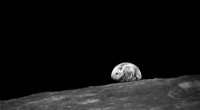
* Space Exploration: Spacecraft and telescopes have allowed us to directly observe the Earth's orbit and study the solar system from different perspectives.
Key Points of the Heliocentric Model:
* The Sun is the center of our solar system, and all the planets, including Earth, revolve around it.
* The Earth's revolution around the Sun takes approximately 365.25 days, resulting in a year.
* The Earth's orbit is not perfectly circular but slightly elliptical.
* The Earth's tilt on its axis causes seasons.
Conclusion:
The heliocentric model is a fundamental understanding of our place in the universe, built upon centuries of scientific investigation and discovery. While the geocentric model dominated for a long time, the heliocentric model has been proven beyond doubt and remains the cornerstone of our modern understanding of the solar system.