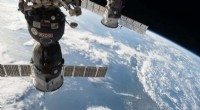
* Orbiting: A satellite is constantly moving around another object, like the Earth, due to the force of gravity.
* Space: Satellites are located in the vast emptiness of space, beyond Earth's atmosphere.
Here are some key points about satellites:
* Natural Satellites: These are objects that naturally orbit planets or stars. Our Moon is the most familiar example of a natural satellite.
* Artificial Satellites: These are objects launched by humans that orbit Earth or other celestial bodies. They serve many purposes, from communication and navigation to scientific research.
* Purpose: Satellites are designed for various purposes, including:
* Communication: Relaying phone calls, TV signals, and internet data.
* Navigation: Providing precise location information (GPS).
* Earth Observation: Monitoring weather patterns, mapping the Earth's surface, and studying the environment.
* Scientific Research: Studying distant stars and galaxies, collecting data about the Earth's atmosphere, and observing weather events.
Examples of Satellites:
* The International Space Station (ISS): A large, habitable artificial satellite orbiting Earth, used for scientific research and as a platform for spacewalks.
* GPS satellites: These satellites make up the Global Positioning System (GPS), providing location information for devices on Earth.
* Hubble Space Telescope: An artificial satellite carrying a powerful telescope, used to observe distant galaxies and celestial objects.
In essence, a satellite is a celestial body or a man-made object that circles another object in space, serving various functions to benefit humanity and advance scientific understanding.