2000 Years Ago (Ancient Times):
* Dominated by Philosophy: Science was intertwined with philosophy. Knowledge was gained through observation, logic, and reasoning, but lacked systematic experimentation and testing.
* Focus on Astronomy, Mathematics, and Medicine: These were the primary areas of inquiry.
* Geocentric Model: The Earth was believed to be the center of the universe.
* Limited Technology: Tools were basic and primarily for observation, like the astrolabe or sundial.
* Emphasis on Explanation: The goal was to understand the world through reasoned arguments and observations.
Science Today:
* Empirical and Experimental: The core of science relies on systematic observation, experimentation, and data analysis.
* Vast Disciplines: Science has branched into numerous specialized fields like physics, chemistry, biology, computer science, etc.
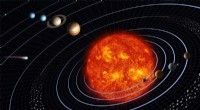
* Heliocentric Model: The Sun is the center of our solar system.
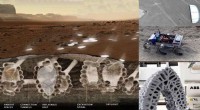
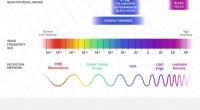
* Advanced Technology: Powerful tools like telescopes, microscopes, computers, and particle accelerators are used to probe the universe and its secrets.
* Focus on Prediction and Control: The goal is not just to explain phenomena, but also to predict and manipulate them.
Key Differences:
* Method of Inquiry: Ancient science was more observational and theoretical, while modern science emphasizes experimentation and rigorous testing.
* Scope and Depth: The vastness of scientific knowledge today, along with the specialization of its branches, far surpasses the scope of ancient inquiry.
* Technological Advancement: Modern science is driven by advanced technology, providing tools that were unimaginable in ancient times.
* Focus: Ancient science aimed at understanding the world, while modern science aims to understand, predict, and control it.
Conclusion:
Science has evolved significantly from its ancient roots. It's a dynamic and ever-expanding field, constantly pushing the boundaries of our understanding of the universe and ourselves.