Here's what goes into making a scientific prediction:
1. Observation and Data Collection:
* You start by carefully observing the world around you and gathering data. This could involve experiments, surveys, field studies, or analyzing existing data sets.
* This step is crucial for identifying patterns and trends that can be used to make predictions.
2. Theory and Hypothesis:
* Based on your observations and data, you develop a scientific theory or hypothesis. A theory is a well-substantiated explanation of some aspect of the natural world, while a hypothesis is a testable prediction.
* Your hypothesis should be based on established scientific principles and be logical and consistent with current knowledge.
3. Prediction:
* You then use your theory or hypothesis to make a prediction about what will happen under specific circumstances. This prediction should be specific, measurable, achievable, relevant, and time-bound (SMART).
* For example, if your hypothesis is that plants grow faster with more sunlight, you might predict that plants grown under a specific light source will grow taller than plants grown in shade.
4. Testing and Validation:
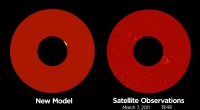
* The next step is to test your prediction through experiments or further observations.
* This testing helps determine if your prediction is accurate or needs to be revised. If your prediction is supported by the evidence, it strengthens your hypothesis. If it's not supported, you might need to modify your hypothesis or develop a new one.
5. Communicating Your Results:
* Finally, you share your findings with the scientific community through publications, conferences, or other means.
* This allows other scientists to review your work, replicate your experiments, and build upon your findings.
Important Considerations:
* Probability and Uncertainty: Scientific predictions often involve probabilities, meaning they are not always guaranteed to be true. There is always some level of uncertainty in scientific predictions.
* Falsifiability: A good scientific prediction is one that can be proven false. If a prediction can't be tested, it's not a valid scientific prediction.
* Openness to Revision: Science is a constantly evolving process. New observations and evidence can lead to revisions or even the abandonment of existing theories and predictions.
Remember, scientific predictions are a vital part of the scientific method, allowing scientists to explore the natural world, test their hypotheses, and advance our understanding of the universe.