The Moon's Influence:
* Gravitational Pull: The Moon's gravity pulls on Earth's water, creating a bulge on the side of the Earth facing the Moon. This is the high tide.
* Centrifugal Force: As the Earth and Moon rotate around their common center of mass, a centrifugal force pushes water away from the Earth's center, creating a bulge on the opposite side of the Earth from the Moon. This is the other high tide.
The Sun's Influence:
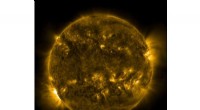
* Gravitational Pull: While the Sun is much larger than the Moon, it's also much farther away. This means its gravitational pull on Earth's water is weaker.
* Spring Tides: When the Sun, Earth, and Moon are aligned (during new and full moons), their gravitational forces combine, creating exceptionally high tides called spring tides.
* Neap Tides: When the Sun, Earth, and Moon form a right angle (during quarter moons), the Sun's gravity partially cancels out the Moon's gravity, resulting in lower high tides called neap tides.
Other Factors:
* Shape of Coastlines: The shape of coastlines can amplify or diminish tide heights.
* Wind and Atmospheric Pressure: These factors can influence local tidal patterns.
* Ocean Basin Shape and Depth: These characteristics affect how water flows in response to tidal forces.
In Summary:
Tides are a complex phenomenon resulting from the interplay of gravitational forces from the Moon and Sun, as well as the Earth's rotation and the geometry of ocean basins.