Here are some reasons why:
1. sheer vastness of the universe: The universe is incredibly vast and contains an estimated 200 billion galaxies. Hubble's field of view is limited, and it is not able to capture such a large portion of the night sky in one image.
2. Distance of the galaxies: Galaxies are extremely distant, and the light from them can take billions of years to reach Earth. It is challenging for telescopes to capture the faint light emitted by distant galaxies, and the exposure times required to obtain meaningful images would be impractical for a single shot.
3. Observational Limitations: The Hubble Space Telescope orbits Earth and is subject to various observational constraints, such as limited aperture size, which determines its resolving power. Additionally, factors such as atmospheric interference, telescope stability, and background noise affect the quality and depth of observations.
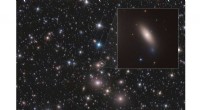
Therefore, while Hubble has captured stunning images of deep space and numerous galaxies, capturing all 100 billion galaxies in the universe in a single image is beyond the capabilities of current telescopes.