1. Early Spacecraft (1950s-1960s):
- Early spacecraft were relatively simple in design and aimed at achieving basic objectives like entering space and sending back basic scientific data.
- Examples include the Soviet Union's Sputnik (1957), the first artificial satellite to orbit Earth, and the United States' Apollo program, which sent astronauts to the Moon.
- These early spacecraft were equipped with basic instruments and communication systems.
2. Reusable Space Shuttles (1981-2011):
- The Space Shuttle program introduced reusable spacecraft that could carry astronauts and payloads into space and return to Earth.
- Space Shuttles had advanced systems for launching, re-entering the atmosphere, and maneuvering in space.
- They were capable of conducting various missions, including satellite deployment, spacewalks, and scientific research.
3. Interplanetary Missions (1970s-Present):
- Spacecraft became more sophisticated and capable of interplanetary missions, exploring planets, moons, and asteroids in our solar system.
- Missions like Voyager 1 and 2, Pioneer 10 and 11, and the Cassini-Huygens probe to Saturn expanded our understanding of the solar system.
4. Space Telescopes (1990s-Present):
- Space telescopes, such as the Hubble Space Telescope (HST) and the James Webb Space Telescope (JWST), revolutionized astronomy by providing high-resolution images and data from deep space.
- These telescopes offered a deeper look into the cosmos, allowing scientists to study distant galaxies, black holes, and other celestial objects.
5. Robotic Exploration (1990s-Present):
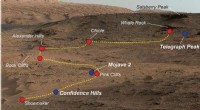
- Robotic missions, including rovers and landers like the Mars Curiosity Rover and the Huygens probe to Saturn's moon Titan, provided detailed information and images from the surfaces of other planets and moons.
6. Commercial Spacecraft (2010s-Present):
- Private companies like SpaceX, Blue Origin, and Virgin Galactic have emerged, developing reusable rockets and spacecraft for various commercial purposes.
- These companies aim to reduce the cost of space travel, enable satellite deployment, and offer space tourism opportunities.
7. Advanced Propulsion Systems:
- Spacecraft continue to explore advanced propulsion systems, such as ion drives, nuclear propulsion, and solar sails, to achieve greater efficiency and reach distant destinations.
In summary, spacecraft have evolved from basic satellites and capsules to sophisticated vehicles capable of complex interplanetary missions, robotic exploration, and even commercial ventures. With ongoing advancements in technology and innovation, the future of spacecraft holds the promise of further breakthroughs in space exploration and scientific discovery.