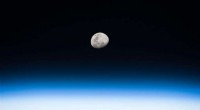
Earth's atmosphere protects the planet from small meteorites. The atmosphere provides a layer of protection by causing the meteorites to disintegrate due to friction and heat. As the meteorites enter the atmosphere, they encounter resistance and begin to break apart. This process is known as ablation. The heat generated by the friction and compression causes the meteoroids to vaporize and glow, creating a streak of light in the sky known as a meteor. Most meteors are very small and disintegrate completely in the atmosphere, never reaching the Earth's surface. While large meteoroids may survive the passage through the atmosphere and create an impact event on Earth, these occurrences are rare. The moon does not play a significant role in shielding Earth from meteorites since its gravitational pull is not strong enough to influence their trajectories significantly.