1. Deep Field Observations:
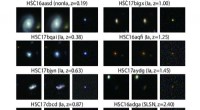
- Hubble's deep-field observations, such as the Hubble Deep Field and Hubble Ultra Deep Field, allowed astronomers to peer into the distant universe and observe galaxies that existed billions of years ago. These deep-field images have provided insights into the early stages of galaxy formation and evolution.
2. Galactic Observations:
- Hubble has studied stars, planets, and other celestial objects within our galaxy, the Milky Way. It has helped astronomers understand the structure, composition, and dynamics of our galaxy, including the formation and distribution of stars, the properties of star clusters, and the nature of interstellar matter.
3. Planetary Science:
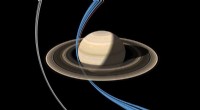
- Hubble has provided detailed observations of planets within our solar system, such as Jupiter, Saturn, Uranus, and Neptune, as well as their moons and rings. These observations have helped understand planetary atmospheres, surface features, weather patterns, and the interactions of planets with their surroundings.
4. Supermassive Black Holes:
- Hubble's observations have revealed the presence of supermassive black holes at the centers of many galaxies. By observing the dynamics of stars and gas near these black holes, astronomers have gained a deeper understanding of the physical processes associated with black hole accretion disks, jets, and active galactic nuclei (AGN).
5. Stellar Evolution:
- Hubble has studied various stages of stellar evolution, including star formation, the life cycles of stars, and stellar explosions like supernovae. These observations have shed light on the processes by which stars form, evolve, and ultimately contribute to the enrichment of the interstellar medium.
6. Cosmology and the Expanding Universe:
- Hubble's measurements of the expansion rate of the universe helped refine the Hubble constant and support the Big Bang theory. It has also contributed to our understanding of dark matter, dark energy, and the age of the universe.
7. Exoplanets:
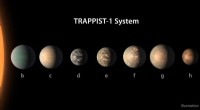
- Hubble has played a crucial role in the discovery and characterization of exoplanets, planets outside our solar system. Although Hubble is not primarily designed for exoplanet hunting, its high-resolution imaging and spectroscopic capabilities have enabled us to study the atmospheres and compositions of some exoplanets.
8. Time-Domain Astronomy:
- Hubble's long-term observations have allowed astronomers to study variable objects and transient events, such as supernovae, stellar outbursts, and the variability of active galactic nuclei. By capturing time-series data, Hubble has helped understand the dynamic behavior of celestial objects.
9. Astrometry and Precise Measurements:
- Hubble's high precision astrometry has contributed to measuring the distances and proper motions of stars and galaxies, which is essential for understanding their spatial distribution, kinematics, and dynamics in the universe.
Overall, the Hubble Telescope has provided invaluable data, stunning imagery, and critical insights that have deepened our comprehension of the universe, its origins, and its evolution. It has pushed the boundaries of our understanding and continues to be a vital tool for astronomers and scientists worldwide.