1. Ultraviolet Telescopes:
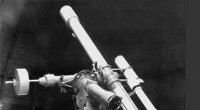
Dedicated ultraviolet telescopes are used to observe the UV band from the ground. These telescopes are equipped with specialized mirrors and coatings that reflect and focus UV light. Notable ground-based UV telescopes include:
- The Stratospheric Observatory for Infrared and Submillimeter Astronomy (SOFIA): A modified Boeing 747 aircraft that carries a reflecting telescope and operates at altitudes above most of the Earth's atmosphere, allowing it to make UV observations.
- The National Science Foundation's Solar Observing Optical Network (NSOON): A network of ground-based telescopes dedicated to observing the Sun in various wavelengths, including the UV.
- The Neil Gehrels Swift Observatory: This satellite has an ultraviolet and optical telescope (UVOT) that can be pointed at specific targets on the sky, enabling UV observations from space.
2. Ground-based Imaging Arrays:
CCD (Charge-Coupled Device) and CMOS (Complementary Metal-Oxide-Semiconductor) imaging arrays can be equipped with UV-transmitting filters or coatings, allowing them to detect and record UV light. These cameras can be attached to telescopes or used as stand-alone imaging devices for specific UV applications.
3. Airborne Platforms:
In addition to SOFIA, other airborne platforms carrying telescopes, such as balloons and drones, can be used to access higher altitudes with reduced atmospheric absorption of UV light. This enables UV observations from above the bulk of the Earth's atmosphere.
4. Ground-based Lidar:
Lidar (Light Detection and Ranging) systems can operate in the UV range. These systems emit short and intense UV laser pulses and detect the backscattered light from molecules, aerosols, and clouds in the atmosphere. UV lidar is primarily used for remote sensing and atmospheric probing.
5. Satellite UV Observations:
Although not directly ground-based, some satellites that orbit the Earth can perform UV observations. These satellites carry instruments specifically designed to measure UV radiation. Examples include the Solar and Heliospheric Observatory (SOHO), the Thermosphere Ionosphere Mesosphere Energetics and Dynamics (TIMED) satellite, and the recently launched Imaging X-ray Polarimetry Explorer (IXPE), which has a secondary UV camera.
These techniques allow astronomers and scientists to study various phenomena in the UV spectrum, such as the composition and properties of celestial objects, the dynamics of planetary atmospheres, and the behavior of active galactic nuclei and quasars. Ground-based UV observations complement space-based observations, as they provide different perspectives and enable continuous monitoring.