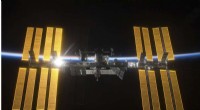
1. Orbit: The Hubble Space Telescope orbits Earth at an altitude of about 547 kilometers (340 miles), in low Earth orbit. It takes approximately 97 minutes to complete one orbit.
2. Size and Weight: The HST is about 13.2 meters (43 feet) in length and 4.2 meters (14 feet) in diameter. It weighs about 11,000 kilograms (24,000 pounds).
3. Optical System: The HST's main optical component is a 2.4-meter (7.9-foot) primary mirror. It also has a variety of secondary mirrors, cameras, and spectrographs to capture images and data in different wavelengths of light.
4. Resolution: The Hubble Space Telescope has a very high resolution, allowing it to capture detailed images of objects in space. It can resolve objects as small as 0.1 arcseconds, which is equivalent to the size of a dime viewed from a distance of 1,000 miles.
5. Instruments: The HST is equipped with a variety of instruments, including cameras, spectrographs, and photometers, to observe different types of objects and phenomena in space. Some of these instruments include the Wide Field and Planetary Camera 2 (WFPC2), the Advanced Camera for Surveys (ACS), and the Cosmic Origins Spectrograph (COS).
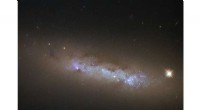
6. Discoveries: The Hubble Space Telescope has made numerous important discoveries, including the age of the universe, the existence of dark matter and dark energy, and the formation and evolution of galaxies and stars. It has also provided stunning images of celestial objects, such as nebulae, galaxies, and supernovae.
7. Servicing Missions: The Hubble Space Telescope has undergone several servicing missions by astronauts to repair, upgrade, and install new instruments. These missions have extended the telescope's lifespan and capabilities, allowing it to continue making groundbreaking observations.
8. Future: The Hubble Space Telescope is expected to continue operating until the mid-2030s. However, NASA is planning to launch a new space telescope, the James Webb Space Telescope (JWST), which is designed to be even more powerful and capable than the HST. The JWST is scheduled to be launched in 2021.